Wow – a year and a half since the last post, back in July 2016. This is horrendously long, but with more than a year to catch up on, hopefully you’ll give me some slack and find some time to skim through.
Truthfully, although I drafted a couple of posts during that period, I never published them and now I have turned a corner in life they don’t seem as relevant. However, I wrote a post back in the spring of 2017, excerpts of which I will share here since it wasn’t a bad effort at describing my state of mind last year (winter 2016/spring 2017).
To begin then:
Winter seemed endless this year. When I look back on the period from Thanksgiving (October) to Valentines Day (for which we still had snow on the ground), I cannot remember doing anything farm related at all, apart from minimal chores for the laying hens. Not because there was nothing to do. I was, frankly, in a bit of a funk. Last summer stretched me beyond where I could really stretch. I was exhausted, struggling physically and mentally with the challenge of fitting an enormous list of things to do into small chunks of available time. I could feel myself stressing about farm activities when I needed to focus on family matters, and knew that my priorities were off kilter. Once all the meat was sold or in the freezer, I came to a grinding halt, farm-wise.
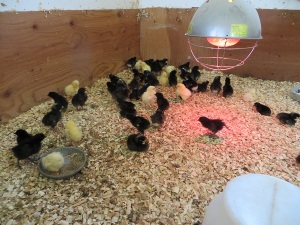
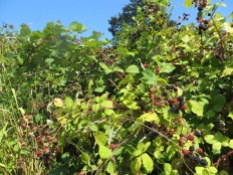
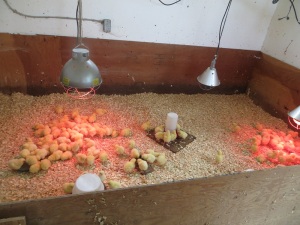
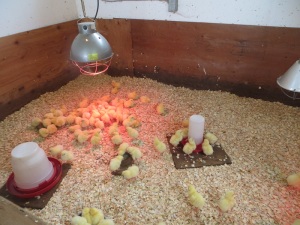
I should have been waging war on the blackberries, winterizing the brushcutter, cleaning out the brooder, mending fences, bringing in the electric fence from the pig run, and all manner of other small but necessary tasks – but I didn’t do any of them. The pullets came into lay just before Christmas, just as planned, and we quickly went from being eggless to being seriously overstocked with eggs. Getting them cleaned and into cartons seemed like a monumental job that I dreaded each evening. As they filled the egg fridge and my cool storage and customers were slow to come back on line after three months with no eggs, I began to believe that even keeping a laying flock was a bad idea.
Not mentioned in that post, I can say now that at that time I had a lot of medical appointments, tests etc stretched out over about a year, and the stress and fear of what they might indicate were absolutely a major part of what I called “a bit of a funk”. On top of that, other members of the family were dealing with stuff in their own lives, and our family dynamic was changing…
Talking to my husband about this, he reminded me that our primary farming goal back when we first moved to the farm 18 years ago was to produce as much of our own food as possible, selling any surplus to cover costs. That was it. For the first three years, that was as big as we wanted to get with farming. While my dreams were always much grander than that, and we even created an ambitious farm plan based on them, the reality of small children, no money and a part time library job meant that I needed to keep my head below the clouds. What happened this past year was that I mistakenly thought that with the girls basically all grown up now, and husband super busy with his business, it was now time for me to get going on that old farm plan. Except that now I work full time at the library and it turns out that almost grown up kids and overworked husbands, while far more independent in many ways, are still very much in need of being kept high on the priority list.
So I did some deep thinking about priorities. And it was clear that farming as a lifestyle, as an occupation, as a business is only a priority to me. We all enjoy home grown food, we all enjoy the space around us that living on a farm provides, but I’m the only one who enjoys the “work” of farming, who gains satisfaction from investing personal time and energy into animal husbandry or veggie production. And I don’t have that time and energy, because I have an off farm job that I enjoy, and it fits far better with family and spouse priorities than farming does. And at the end of the day, given a choice between a healthy family dynamic or pursuing my personal priorities, family wins, hands down.
When I started developing some health issues and struggling with low energy, and sought help with the farm chores from kids and hubby, they were all happy to pitch in with day to day stuff like collecting eggs or shutting in birds, but no one wanted to commit a weekend morning to mucking out the brooder or pulling up electric fence and storing it. They saw such jobs as low priority and treated them accordingly. At the same time, they were all willing to tackle more housework and meal preparation. So the message was pretty clear. And if my family is my first priority, then this is kind of a no-brainer. But I really struggled with letting go…
And why do I want to farm anyway? It’s something deep in my gut. I usually say that I was raised to it, but that doesn’t really fly, firstly because countless farm kids over the millennia have been “raised to it” and couldn’t wait to leave. And in point of fact, my being “raised to it” was a relatively short period of my life – about 6 years from age 8 to 14. Certainly I come from a family of farmers on my father’s side, but almost anyone can say that if they go back far enough in their family history. Perhaps it is as simple as the fact that I just feel right when I’m working on a fence in the field, or struggling to catch chickens in the wee sma’s on butchering morning. I am immensely satisfied by the sight of animals – relaxed and content because I have given them the living conditions that make them happy.
I’d love to not have to put a cost on my why. How can you put a price on contentment, peacefulness and fulfillment? But the reality is that raising your own food costs. It costs time, energy and money. Every minute of time spent spreading manure on a field is time not spent on some other activity. Every ounce of energy spent moving pasture poultry pens on the field is energy not spent in some other way. Every dollar spent on animal feed is money not spent on other things. Maybe it’s all good value, but it depends on what you value.
Which is to say that if I had worked at farrming as my full time job, the money would have mattered a lot more; as it was, it remained a part time occupation for me. The real issue was the return on the amount of energy and time expended. And even now, with a massive shift in our farming activities (ie we no longer do any farming), we still keep laying birds because in our area, selling eggs is an easy profit, which we need to help maintain our farm tax status…so money is even now a factor.
Obviously, efficiency can mitigate a great deal of these costs. And selling surplus eggs, meat, veggies can cancel out the cost of feed and bedding, perhaps even create profit. To a point, economies of scale matter if one wants to farm long term. It’s all very well to prefer to do things by hand, the slow way, spending all of your time and energy on farming. There won’t be much money, but if this is the lifestyle of choice, that may be OK. But you better be sure that if you are doing this with a spouse and/or family, that they are 100% in it with you. That you and your spouse both believe it will be nothing but good for your children to grow up with their days revolving around the rhythms of the farm.
Clearly we were not all 100% in. I’d actually known this for years – back when we’d created the farm plan when the girls were tiny, the plan had acknowledged that my husband would be working off farm and not engaged with farm work in any way, and we were both happy with that as part of the plan. But as we juggled family life, jobs and priorities over the years, I came to realize that Joel Salatin’s wise words, emphasized throughout his book “You Can Farm“, were absolutely correct…
You think Joel Salatin is having one of his exaggerated over the top moments when he says that if you’re going to make a success of farming, you better forget Little League and ballet lessons? Think again. Something will have to give. if you place a high value on extra curricular activities for your kids, that will take time and money and energy from you and your farm. In an attempt to make it work for all of you, you may well end up compromising your farming values – perhaps you will choose to keep your pigs in the barn instead of on pasture so you don’t have to worry about them getting out while you’re at the ball diamond 3 nights a week through June, even though in your heart of hearts you have always believed they should have the opportunity to root and dig and wallow in a shady pasture. What if you spend 40 hours of your week off the farm, not counting commuting time? That 40 hours certainly represents dollars coming in, but it also represents time and energy going out – and for me at least, my best energy of the day. Moreover, that 40 hours is nearly always during daylight hours, which are coincidentally pretty valuable for farming. And there’s a real danger that you’ll become so focussed on getting to work on farm projects in your “spare” (aka time not spent at your off farm job) that you will have no time to spend on fun or relaxation or time with your family. All work and no play – that’s a real danger. Maybe you are able to get your family out there with you, all working together on the various things that need doing and maybe you’re the kind of parent who can make that kind of fun. Way to go. But bear in mind that when you get home from that off farm job, most of the family is ready for down time just around the time you are ready to get the blue jeans on. So they go off for a walk at the beach, without you. Or you decide to go with them and skip moving the pig fence, putting off the well being of the pigs in favour of your kids.
I have always been impressed by the example of how the Salatin family lives out work/life balance – of engaging the kids of multiple generations in meaningful farm work while still providing fun and family time. There were times when we seemed close to living in alignment with the Salatin family’s example…
My family have always 100% supported my farming endeavours. But they have never been 100% interested in being farmers. Over the years, they have helped build sheds and shelters, they’ve lugged hoses and water jugs, feed and bedding. They have been up at the crack of dawn catching broilers for butchering or fetching chicks from the post office. They have collected eggs, held fence wire, emptied rat traps and held flashlights while we try to secure tarps in a windstorm. They are as preversely proud as I am that we have not bought chicken from a store in more than 10 years, nor pork in the last 5.
But make no mistake – that balance the Salatins have achieved in their family is a result of one very fundamental priority – that they identify as a family as farmers first. This one priority is the benchmark which affects other decisions they make regarding extra curricular activities like travel or clubs or other jobs. In our family that benchmark priority has never been farming, whatever my own private priorities might have been…
My husband and I have placed a high value on education and the broadening of character that comes from travel and similar opportunities. I have always felt strongly about volunteering and participating in the community. For all that I love farming, I love my family more, and over the years I have happily prioritized family over the farm. As a couple, we have felt that our money, time and energy are best spent on family goals. So yes, our girls were in Girl Guides, church youth group, and school extra-curricular activities. While they were both paid for farm work in their teen years, as they took on some major responsibilites while I was at work off-farm, they both looked forward to the day they could work at other things, which has come to pass. We have travelled quite a bit throughout the girls teen years – and the’ve done trips without us as well. My husband’s business has grown to the point that he no longer has time or energy for farm tasks.
Family trips overseas, missions trips for each of the girls, RESPs providing for the girls post-secondary education if they wanted to pursue it, extended health benefits – those things were all achieved through my husband’s business success and my off farm job. While we could have enjoyed a fulfilling life as a family of farmers, and that would have provided it’s own opportunities (and was the path I dreamed of taking), it would have been different financially. Or not. We’ll never know, because we took the path we took.

Joel Salatin has said that farming is much easier when you work with Nature instead of against her. If you take Nature as being something much larger than the physical acres and animals that comprise a farm, it becomes true of the people that live there as well. I think that a paraphrase of this maxim might be true for more of us than admit to it: Energy flows best when it’s going in the right direction. The last few years when I struggled to balance work off farm, involvement with family and grow the farm – I struggled. Like uphill, upstream, against the wind struggled.
I’m 55 this year. I’m apparently not one of those people who ages gracefully. I’ve come to an awareness of the process with denial, stubborness and ultimately a somewhat grudging acceptance. 5 gallons of water feels heavy nowadays. I am not up for lugging bales of hay any distance. I take breaks more often if I’ve been on my feet for a while. If my energy is on the wane, then I wamt to spend it wisely.
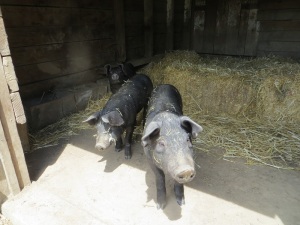
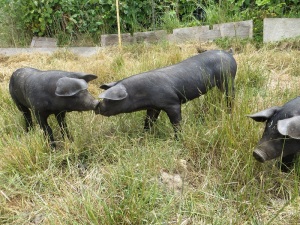
And now? Well, last summer I told everyone these were the last pigs. I thought I’d feel bitter and resentful about that, but instead I felt peaceful, and relieved.

Which brings me to now, nine months after I wrote out all this internal turmoil. I’m 56 now, and all the medical tests that began in spring 2016 culminated last May (2017) with a diagnosis of “high risk for MS”, which is a doctorish way of saying that I have some of the symptoms of MS, but not enough to be formally diagnosed with the disease, for which I am supremely grateful. I have some (not a lot) demyelineation, which is when your body attacks the myelin sheathing that protects your nerves. This means my feet are more or less numb, one leg has noticeable muscle weakness, and I get fatigued sometimes – tired to the point of finding it difficult to move smoothly, so tired that I am weepy and cranky. MS is an auto-immune disease, and there are more people diagnosed with it in Canada than anywhere else in the world, which is thought to be related to the fact that one cause of the disease is believed to be vitamin D deficiency, to which Canadians are typically prone living so far north as we do (which makes me wonder about Scandinavia and Russia, but anyway). Not uncoincidentally, stress is probably also a factor, as it is with other auto-immune diseases, and there is no question I found 2016 to be a very stressful year, in no small part because of the whole work/family/farm balance thing.
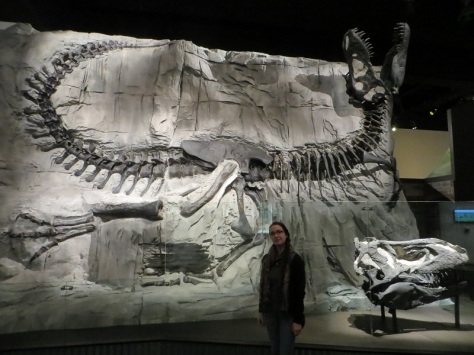
So it’s just as well that I came to this relatively peaceful place in my mind about farming without knowing the diagnosis – because I’m absolutely stubborn enough that I would have likely been determined to prove that I could still do what I wanted despite physical limitations. Not a good reason for farming and probably not possible anyway. I miss the satisfaction of farm work, but truthfully I’m relieved not to be driven by that never ending “should do” list. Nowadays, I still work full time at the library, but I go to yoga twice a week, I have upped the quantity of leafy greens I eat by a huge amount, I take a fairly hefty dose of vitamin D daily and I see the doctor more regularly than I ever have except during pregnancy. I also have seen more movies with my husband, had more family games nights, had long morning coffee chats with our eldest daughter, and gone craft store shopping with the younger daughter. My husband and I had a fabulous summer getaway on a nearby island staying in a cob house on a working sheep farm. The elder daughter and I went to a women’s retreat together in September, and the younger daughter and hubby and I spent a few days geeking out over dinosaurs in Alberta in October. It’s a little sad that it took the risk of an auto-immune disease to make me wake up and recognize my priorities for what they were, but I’m there now. And I’m loving it.





 Sailors Small Farm